The Impact of International Players on the NBA
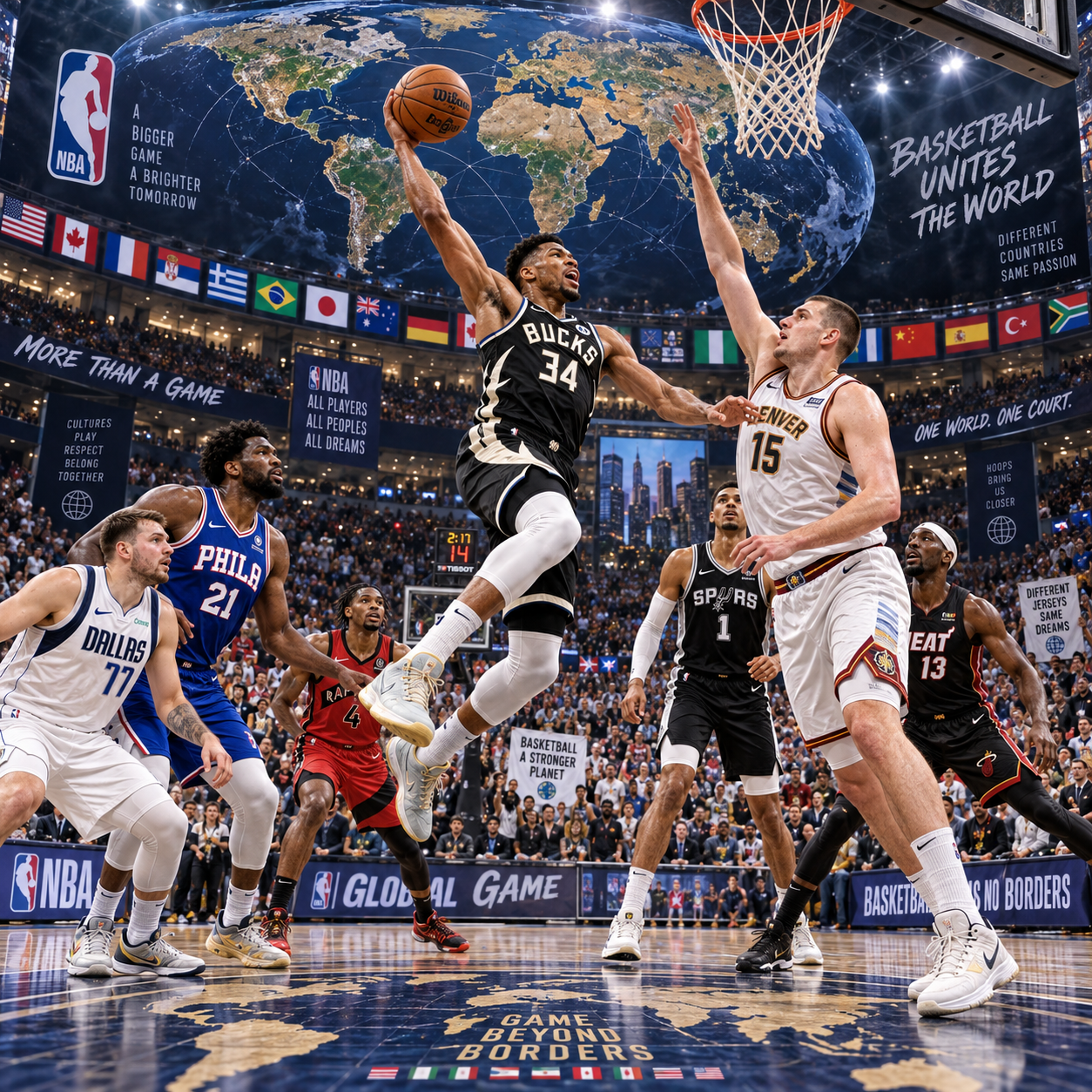
The impact of international players on the league reaches far beyond the number of passports in NBA locker rooms. Players developed in Europe, Africa, Canada, Latin America, Asia, and Australia have influenced tactics, team building, award races, youth development, and the NBA’s identity around the world.
International talent has also changed how teams search for prospects. A modern front office may study a teenager in a regional academy, a professional league overseas, a national team tournament, and an Olympic basketball performance before making a draft decision. That wider talent pool has made the NBA more competitive, more adaptable, and more globally connected.
How International Talent Became Central to the NBA
International talent became central to the NBA as teams built stronger global scouting networks and recognized that elite player development exists outside the United States. The league moved from occasional international signings to a continuous worldwide talent pipeline.
Early international contributors often faced greater uncertainty. NBA teams had fewer reliable scouting reports, limited film, and less familiarity with overseas coaching systems. Players such as Hakeem Olajuwon, Dirk Nowitzki, Manu Ginóbili, and Pau Gasol helped change that perception by proving that international prospects could become franchise leaders, champions, and All-NBA selections.
The shift accelerated when NBA organizations created regional scouting positions and invested in relationships with European clubs, national federations, youth tournaments, and international basketball academies. The draft became less dependent on a prospect’s American college résumé. Experience in the Spanish ACB, France’s LNB, Serbia, Lithuania, Australia’s NBL, or other professional environments could now provide valuable evidence of readiness.
This growth does not mean every international player follows the same route. Some arrive through established professional leagues, while others develop in academies, American high schools, NCAA programs, or family and community basketball systems. Treating international players as one group obscures the different coaching philosophies, competition levels, languages, and cultural experiences that shape them.
The result is a broader definition of NBA readiness. Teams increasingly evaluate decision-making, adaptability, positional versatility, and performance against older competition alongside athletic ability.
Changing the Style and Tactics of the League
International players have influenced NBA playing styles by bringing advanced passing, perimeter skill, positional flexibility, and a willingness to make quick decisions within team-oriented systems.
International basketball backgrounds often emphasize reading the floor and moving the ball. That influence can be seen in the development of large playmakers, skilled centers, and forwards who initiate offense rather than simply finish possessions. Nikola Jokić has made elite passing from the center position a foundation of an NBA offense, while players such as Luka Dončić and Domantas Sabonis demonstrate how size can create advantages as a primary decision-maker.
European and other international systems did not invent every modern NBA trend, but they helped normalize skills that once appeared unusual for certain positions. A seven-footer who shoots from outside, a forward who runs pick-and-rolls, or a center who operates from the elbow can now serve as a team’s offensive hub.
- Ball movement: Skilled international players often strengthen split actions, handoffs, extra passes, and half-court reads.
- Positional flexibility: Teams can place versatile forwards and centers in roles traditionally reserved for guards.
- Spacing: Shooting big men pull defenders away from the rim and create driving lanes.
- Decision speed: Players who developed in structured systems may recognize rotations early and punish defensive mistakes.
These trends have tactical limits. An international background does not automatically produce unselfish play or shooting skill, and NBA teams still adapt every player to the pace, spacing, defensive rules, and physical demands of the league. The broader effect is a larger menu of viable offensive ideas.

Raising Competition and Redefining NBA Stardom
International stars have raised league competitiveness by adding more elite creators to the MVP race, All-NBA conversation, and playoff landscape. They have also expanded the image of what an NBA superstar can look and play like.
Jokić, Giannis Antetokounmpo, Dončić, Joel Embiid, Shai Gilgeous-Alexander, and other internationally connected stars have become central to how teams evaluate championship potential. Their success challenges the older assumption that a contender must be built around an American-born perimeter scorer. Some teams now organize their entire offense around a playmaking center, a multinational wing, or a forward with guard-level ball control.
International players affect competition in two ways. Established stars raise the quality of the league’s top tier, while less famous contributors improve depth. A rotation may include a defensive specialist from France, a shooter from Serbia, a developing wing from Canada, or a playmaking guard from Australia. Each player can bring a different tactical solution.
MVP and All-NBA recognition also carries symbolic importance. When international players win the league’s highest individual honors, the achievement validates global development systems and gives young athletes outside the United States a visible model. National teams and Olympic basketball add another layer: NBA players return to represent their countries, creating high-level competition and strengthening the connection between NBA stardom and national basketball identity.
There is a trade-off. Concentrating talent among a small number of elite international stars can encourage simplistic narratives about one country or region producing the next superstar. Team success still depends on coaching, health, roster construction, defense, and financial flexibility.
The Role of Global Scouting and Player Development
Global scouting helps NBA teams find talent earlier and evaluate players in more varied competitive settings, while player development turns raw ability into NBA-level decision-making, strength, and consistency.
Scouting departments now combine live evaluation with video analysis, performance data, background research, and conversations with coaches. Scouts may track a prospect across a domestic league, international tournament, academy competition, and national team event. The goal is not simply to identify production. It is to understand how a player responds to physical pressure, unfamiliar opponents, limited minutes, and changing roles.
International basketball academies are especially important because they provide structured training, education, strength programs, nutrition support, and exposure to professional concepts. Clubs and federations in Europe, Africa, and other regions can develop players over several years before an NBA team ever considers drafting them.
Strong development systems teach transferable habits:
- Playing with pace while making controlled decisions.
- Defending multiple positions and communicating through complex actions.
- Using both hands, changing speeds, and passing under pressure.
- Balancing individual creativity with team responsibilities.
NBA teams still must translate those skills. The NBA court is longer, the schedule is demanding, and spacing differs from many international environments. A successful organization creates an individual development plan rather than assuming that a player’s previous system will transfer without adjustment. The International Basketball Federation provides useful context for the broader structure of global basketball and national-team competition.
Expanding the NBA’s Global Audience
International players expand the NBA’s global audience by giving fans a personal connection to teams, games, and stories that might otherwise feel distant.
A star from Greece can attract new viewers across Europe. A Canadian, Australian, African, or Latin American player can make NBA results more relevant in local media and youth programs. Fans may follow one player first, then learn about that player’s team, teammates, opponents, and league history.
This connection affects several parts of the NBA ecosystem:
- Media interest: National broadcasters and digital outlets have stronger reasons to cover games involving local or regional players.
- Merchandising: Jerseys and branded products become more meaningful when fans identify with a player’s national or cultural background.
- Grassroots growth: Young athletes see a realistic pathway from local basketball to the world’s highest-profile league.
- Commercial partnerships: International stars help the NBA build relationships with sponsors and broadcasters in new markets.
NBA globalization therefore works best when it supports genuine basketball interest rather than relying only on promotional events. A fan who watches an international star in the NBA may also follow national teams, Olympic basketball, youth tournaments, and local professional leagues. The relationship becomes cultural, not merely commercial.
Challenges and Limitations of the International Pipeline
The international pipeline creates opportunities, but players often face adaptation challenges involving language, culture, travel, rules, media pressure, and uneven access to development resources.
The adjustment to the NBA can be abrupt. Players must learn new defensive terminology, manage a longer schedule, handle frequent travel, and compete against athletes with exceptional speed and strength. Coaches may also ask them to change roles quickly. A prospect who was a primary creator overseas might begin as a spot-up shooter or bench defender in the NBA.
Language barriers can affect film sessions, interviews, locker-room communication, and confidence. Cultural differences influence food, family routines, privacy, and relationships with the media. These challenges do not measure basketball ability, yet they can shape how quickly a player earns trust and opportunity.
Development systems also remain uneven. Some prospects receive professional coaching and medical support from an early age, while others come from regions with fewer facilities, limited competition, or expensive travel requirements. Global scouting can identify talent, but it cannot solve every structural gap.
Teams make mistakes when they treat international experience as a guarantee of intelligence, discipline, or team play. They also misjudge players when they overvalue unfamiliarity and overlook legitimate strengths. Better evaluation asks three practical questions:
- Which skills will transfer immediately to NBA spacing and pace?
- Which weaknesses require physical, technical, or cultural support?
- Does the organization have the staff and patience to complete that development?
What International Influence Means for the NBA’s Future
The future impact of international players will likely appear in deeper scouting networks, more varied offensive systems, stronger development partnerships, and a broader definition of NBA identity.
Teams will continue searching beyond familiar markets, but the next advantage may come from evaluating overlooked regions rather than simply repeating established scouting routes. Technology can expand video access, while partnerships with academies and national federations can improve context around a prospect’s performance.
Player development should become more individualized. A young guard from a fast-paced professional league may need help with NBA defensive schemes, while a physically gifted forward from an emerging program may need experience reading advanced spacing. The organization that connects scouting, coaching, sports science, education, and cultural support will have a better chance of turning potential into reliable production.
The NBA’s identity will also become more layered. International players will influence how fans discuss greatness, how national teams approach Olympic basketball, and how children in different countries imagine a basketball career. American basketball remains a major source of talent and innovation, but it now operates within a much wider network.
The central lesson is practical: globalization matters because it improves the league’s talent base and expands its imagination. International players have made the NBA more tactically flexible, culturally representative, and difficult to predict. Their influence will keep growing as scouting becomes more precise and basketball development becomes more connected across borders.